 ZebraZones

One break-in, hundreds of victims
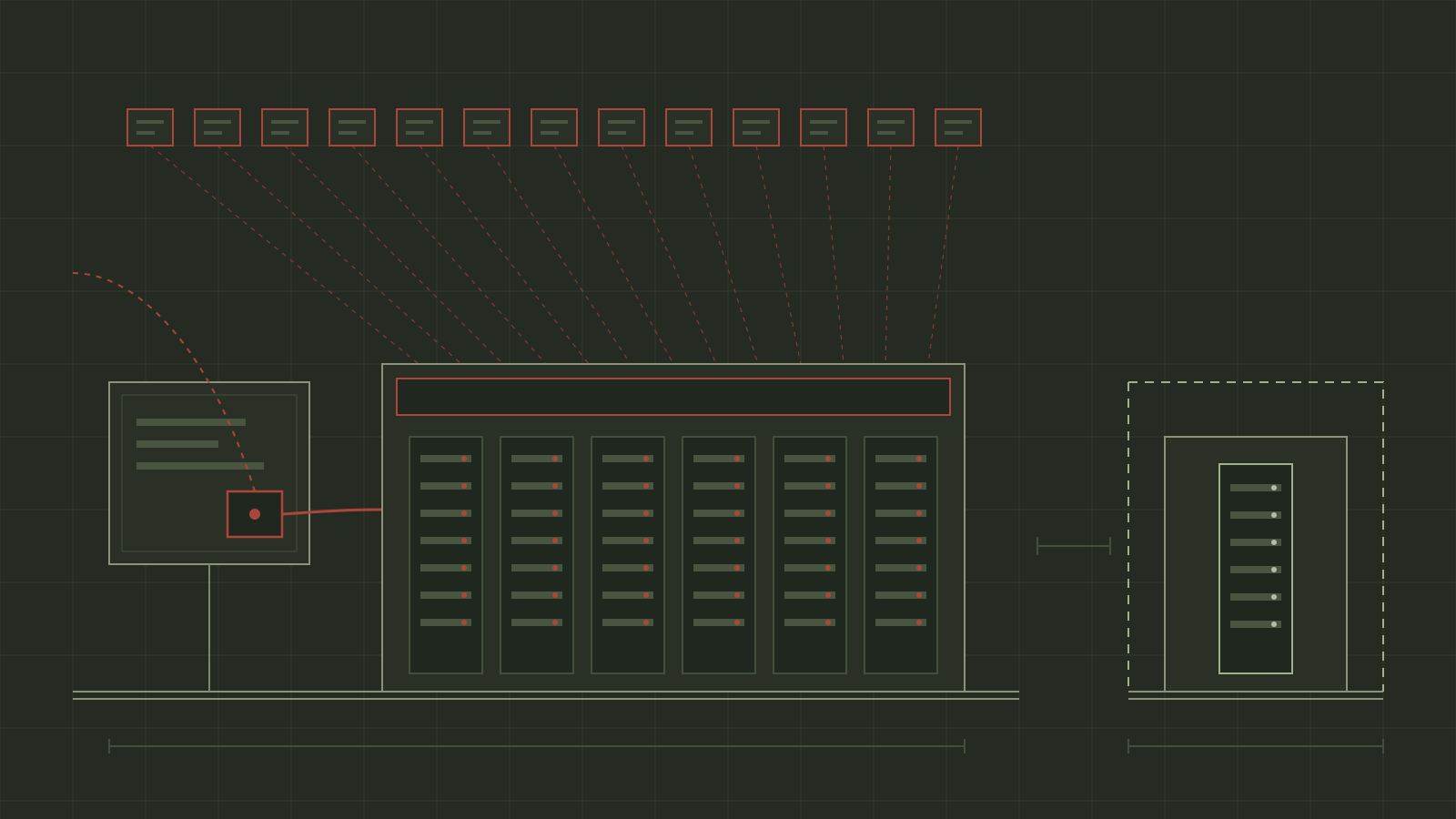
Imagine you run a logistics business, but then your warehouses stop shipping and your servers are encrypted. Why did it happen? The attackers did not hack you directly. They broke into the cloud provider you rent your services from.
That happened in Japan on October 7. Attackers hit IDC Frontier, a cloud provider owned by SoftBank, and encrypted the infected systems with ransomware. Nearly 500 companies and local governments went down at once.
One break-in, hundreds of victims. That's the pattern of a supply chain attack.
How the attack happened
Here's exactly what happened. IDC Frontier's customers log into a web portal to manage their servers. That login system used an open-source software component with a security flaw. The attackers exploited it to get in.
From there, they reached the management console and gained admin rights for the virtualization software. That software ran the clients' virtual servers. Then they shut down the servers and encrypted everything.
Recovery was so difficult that customers were told to rebuild from their own backups.
How it could have been prevented
How could this attack have been prevented? Let me walk you through the zone integrity standard.
It starts with separating your systems into zones that can only interact through secure gateways. Then you map how each zone connects to the outside, including every third-party dependency.
Applied to IDC Frontier
Apply that to IDC Frontier. The customer login is a zone, and a highly critical one, because whoever controls it controls the service of every customer.
And that zone had an external dependency, an open-source component with a flaw, wired directly into it. That is the core failure here.
A dependency map would have listed that component. Checking it would have found the flaw before the attackers did. And a login zone this critical should never trust an outside component without independent scrutiny.
The customers: a separate backup zone
Now let's look at the customers. Many of their zones likely run on that one hoster: websites, logistics systems, internal tools. When the hoster fell, all of those zones fell together.
You cannot prevent this from the outside, but you can make sure to recover. The zone integrity standard demands a backup zone that is physically separate from the rest of the systems and fully independent from the hoster. Different provider, different location, different logins.
If the hoster is encrypted, that zone remains untouched, and you can always rebuild from it.
Red teaming
When organizations try to adopt a zone-based approach, they often find the zones they wish they had. But they only look at the intended path and overlook how an attacker could move from one zone to another.
This is where red teaming comes in. Specialists play the attacker and test every security boundary between zones.
AI-facilitated attacks
It matters now more than ever. Japan's national computer emergency response team already warned that many recent attacks on Japanese companies are AI-facilitated. That means they automatically probe systems for weaknesses.
Questions for your organization
Now back to you. Which vendors are crucial to your business? Do you know how your systems map to zones with strict security boundaries? Could you recover from backups without external help?
We can help you answer these questions. We are ZebraZones, the cybersecurity authority with a mission to protect enterprise systems in the age of agentic AI.
References
Sources & further reading
- 01BleepingComputer, “Ransomware attack disrupts Japan's IDCF Cloud used by govt clients”
- 02@IT (ITmedia), on the IDCF Cloud attack path through an OSS vulnerability (Japanese)
- 03SC Media, “Japanese cloud provider IDC Frontier hit by ransomware attack”
- 04Recorded Future, “Behind Japan's Warnings of a Cyber Crisis”